

The University of Salamanca, through the Cultural Activities Service, will keep the exhibitions “NWO. The New World Order”, by Kepa Garraza, open to the public until February 15; and “RRSS. Painting on social networks”, by Ana Riaño.
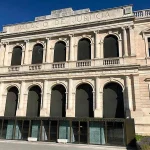
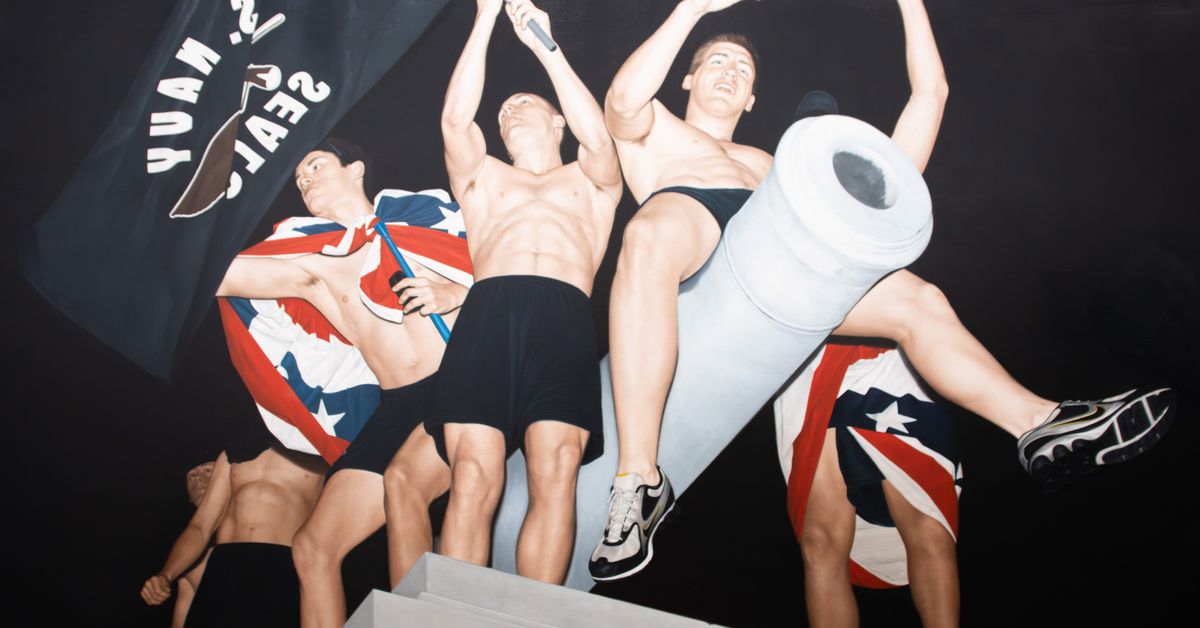
The exhibition hall of the Hospedería Fonseca hosts the first Kepa Garraza retrospective in which, through almost fifty paintings, the artist explores the darkest aspects of the “new world order” that emerged at the beginning of the 21st century after the trauma of the 9/11 attacks and the economic recession of the 2008-2014 period. A new order that was reformulated starting in 2020 with the wave of protests that crossed the five continents after the post-COVID-19 crisis and the unbearable climate of current war threat.
Specifically, the room brings together eight different series with mostly large-format pieces made by the Basque artist between 2007 and 2025. His monumental paintings redefine in the present the formats, compositions and iconography of the so-called “history painting” through an irreverent game of anachronisms, uchronies and dystopias that, after provoking a first state of shock in the viewer, due to its astonishingly veristic technique, immediately invites him to question the close relationship between art, power or propaganda, and to reflect on issues related to the representation of violence and the social and geopolitical conflicts that are associated with it in the post-truth era.
Ana Riaño’s exhibition, which the public can visit in the Exhibition Hall of the Patio de Escuelas Menores, is made up of about thirty pieces based on the idea of how many emblematic artists would behave on social networks if they lived today.
The exhibition, as Ana Riaño confessed, is based on “imaginary screenshots, creating invented interfaces of Facebook pages taking into account the artists’ friendships, their latest publications or even advertising adapted to their time.” In this sense, Riaño pointed out that the pieces “speak about the identity of the artist on social networks, because in the end we have to sell ourselves when we decide to be artists” and highlighted the vindicating role of her works, since it raises the question of the role women artists, today separated from the history of art, would have had if they had been able to express themselves through social networks.
With this set of pieces, the Basque artist aims to reflect on the development of Web 2.0 and what authors such as Gilles Lipovetsky (2009) have called “pantallocratic society”, or in other words, how pictorial practice is being affected in its creative processes and iconographic imaginaries by the “poetics of connectivity” and the socio-affective dynamics of social networks.