





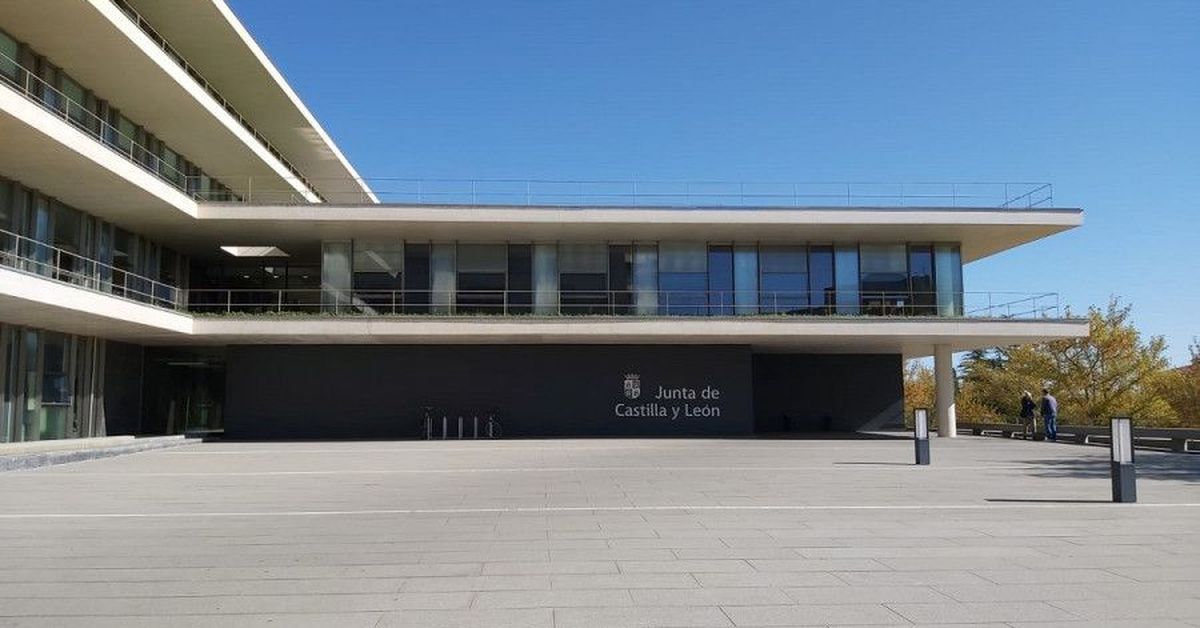
This Thursday, the Government Council approved the new decree that regulates the provision of services in the teleworking modality for personnel serving the Administration of the Community of Castilla y León. A rule that benefits public employees of the General Administration and its autonomous organizations, without affecting teaching staff or statutory staff of health services (SACyL). Its objective is to consolidate a stable, homogeneous and guaranteeing model that improves the organization of work, favors conciliation and reinforces the modernization of public services.
The decree establishes a clear and orderly framework for access to teleworking, reserving it for those positions whose functions can be fully carried out remotely and always guaranteeing adequate attention to the needs of the service. Among the requirements, it is required to have held the job in person, or another with equivalent functions in the same body or administrative unit, for a minimum period of six consecutive months immediately prior to the application, which ensures sufficient prior knowledge of the position and its operation.
The new decree pays special attention to the groups with the greatest protection, which will have priority in access to teleworking. These groups include victims of gender violence, people who have suffered attacks or situations of sexual or work harassment, personnel with a recognized degree of dependency or disability that affects mobility, those who request teleworking for reasons of reconciling personal and family life, and those who reside in municipalities of Castilla y León with less than 2,000 inhabitants, thus contributing to territorial cohesion, the fight against depopulation, and the coverage of the most peripherals.
The standard also links teleworking to digital training, by requiring the possession of the digital skills certificate of personnel serving the Community Administration, recently created by the Junta de Castilla y León and whose regulation will be completed soon. In this way, an Administration that is more prepared, efficient and adapted to the new digital work environments is promoted.
The teleworking modality will have a maximum initial duration of one year, with the possibility of up to two additional extensions, and will generally be articulated through a distribution of the day that combines two days of face-to-face work and three days of remote work, favoring an appropriate balance between presence, coordination and flexibility.
Each authorization will be based on an individual teleworking plan, in which the objectives, the organization of work, the monitoring and evaluation mechanisms, the time slots of availability and the specific days for providing remote services will be established, reinforcing results orientation and transparency in management.
The decree also incorporates training as a key element of the model, including specific training actions on teleworking, occupational risk prevention, data protection and information security, thus guaranteeing that this modality is developed with full guarantees for both staff and the Administration.
Finally, an Evaluation Commission is created, with the participation of the regional administration and trade union organizations, which will carry out annual monitoring of the operation of teleworking, evaluate its results and propose improvements, reinforcing the participatory and evolutionary nature of the standard.
With this decree, the Junta de Castilla y León takes a new step in the modernization of the Administration, betting on regulated, safe and efficient teleworking, which improves the working conditions of public employees and contributes to the provision of higher quality public services.