

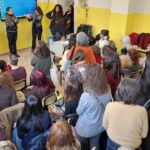




The days of the digital divide in Castilla y León are numbered thanks to the ambitious training offensive that the CyL Digital program has designed for this month of February. With an unprecedented deployment throughout the territory, the initiative will offer a total of 272 completely free training activities, designed to transform the technological skills of citizens, regardless of their age, professional profile or place of residence.
The commitment to territorial cohesion is one of the fundamental pillars of this programming, placing a special focus on the technological revitalization of towns. Of the planned actions, 152 will be taught directly in rural areas through the network of 342 Associated Rural Centers.
This deployment guarantees that residents of municipalities and regions with fewer technological resources have the same learning opportunities as those who reside in urban environments. For their part, the CyL Digital Spaces located in the nine provincial capitals will host 125 additional activities to respond to the high demand in the areas with the highest population density.
Flexibility is another of the keys to this call, which adds to its face-to-face offering a catalog of 25 courses in online mode through its official platform. This option allows interested parties to manage their own learning pace and adapt training to their personal schedules, eliminating any physical barriers to knowledge.
The content of the sessions has been carefully selected to meet the real needs of today’s society. From seniors looking to master the basic and safe use of their mobile phone, to self-employed people and entrepreneurs who need to integrate technological tools to grow their businesses. Likewise, the program offers vital resources for unemployed people seeking to improve their employability and families who wish to strengthen their digital skills in an increasingly connected environment.
The TuCertiCyL service will continue to facilitate the official accreditation of this knowledge during February, carrying out 28 certification tests, distributed in 15 basic level exams and 13 intermediate level exams.